How I Got Pregnant Naturally at 38: What Actually Worked
Trying to conceive after 35? Here's what worked for me naturally — ovulation tracking, supplements, lifestyle changes, and reducing stress.
TTC
3/6/20269 min read
This post contains affiliate links, which means I may earn a small commission if you purchase through my links — at no additional cost to you.
When we decided to try for our first baby at 38, I knew I wanted to be proactive — but I also didn’t want to fall into panic mode.
Trying to conceive in your late 30s can feel overwhelming. There’s a lot of noise online. A lot of “must-haves.” A lot of fear-based messaging.
This isn’t medical advice — just an honest look at what I personally used, changed, tracked, and focused on while trying to conceive naturally at 38.
Some of these things I still use today. Some I tried and stopped. And some may have helped — or may have simply helped me feel like I was doing everything I reasonably could.
If you're trying to get pregnant after 35, I hope this feels encouraging — not overwhelming.
Our Timeline: Coming Off Birth Control & Trying to Conceive at 38
Growing up, I never experienced major hormonal issues, cramps, or PMS that I was aware of. I started taking birth control pills in my early 20s and stayed on them until I married my first husband at 32.
After stopping birth control, things changed. My periods became irregular, and I started experiencing severe cramping around my belly button. Eventually I learned this was related to ovarian cysts and endometriosis in my belly button, which was surgically removed in June 2020.
Thankfully, the cysts eventually resolved on their own. After going through a divorce, I went back on birth control at 35.
I met my current husband when I was 37, and after a whirlwind romance we got married in February 2022. About three months before the wedding, I stopped taking birth control again because I knew we would start trying to conceive right away and I wanted to give my body time to adjust.
By the time we got married, I was about a month away from turning 38. Between my age and my previous endometriosis issues, I was concerned about whether getting pregnant would be difficult.
I obviously knew how pregnancy worked, but I didn’t fully understand when conception actually happens during a cycle. So I started doing basic research and began tracking my cycle.
As each month passed without a positive pregnancy test, I researched more and more. I tracked everything, analyzed symptoms, and tried to solve the problem with lifestyle changes and supplements.
Late that summer, I began seeing an acupuncturist who specializes in fertility. During our consultation we discussed my medical history, my job, and my lifestyle. After listening to me talk about my work and commute, she said something that stopped me in my tracks.
She told me I needed to decide what was more important — my job or starting a family.
At the time, I had a stressful job and a long commute. While I had always planned to quit eventually to become a stay-at-home mom, I hadn’t planned to do it that soon.
Still, I couldn’t ignore what she said.
I began seeing her weekly, took the Chinese herbs she recommended, and eventually decided to leave my job earlier than planned because I had a strong feeling the stress was a major factor.
As it turned out, I may have been right.
My last day of work was December 16, 2022.
My next cycle started December 17, 2022.
I found out I was pregnant on January 14, 2023.
I can’t prove stress was the reason, but the timing is hard for me to ignore.
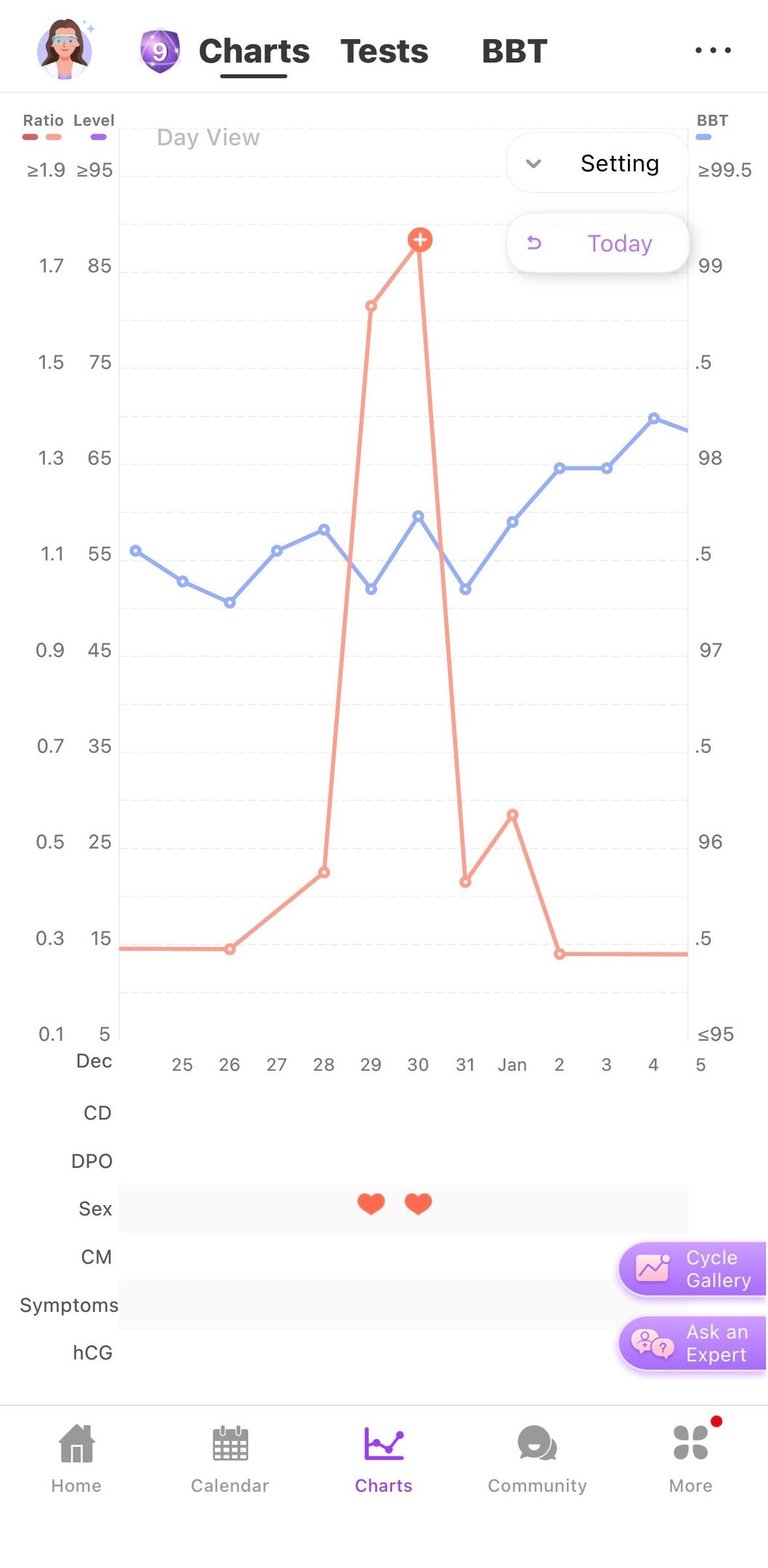
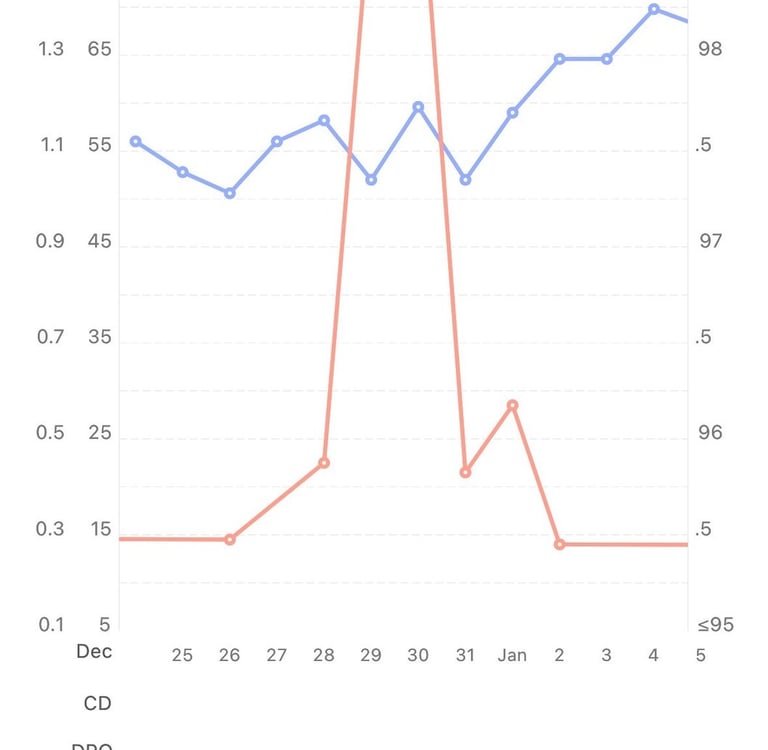
PreMom App Screenshots from the cycle when I conceived
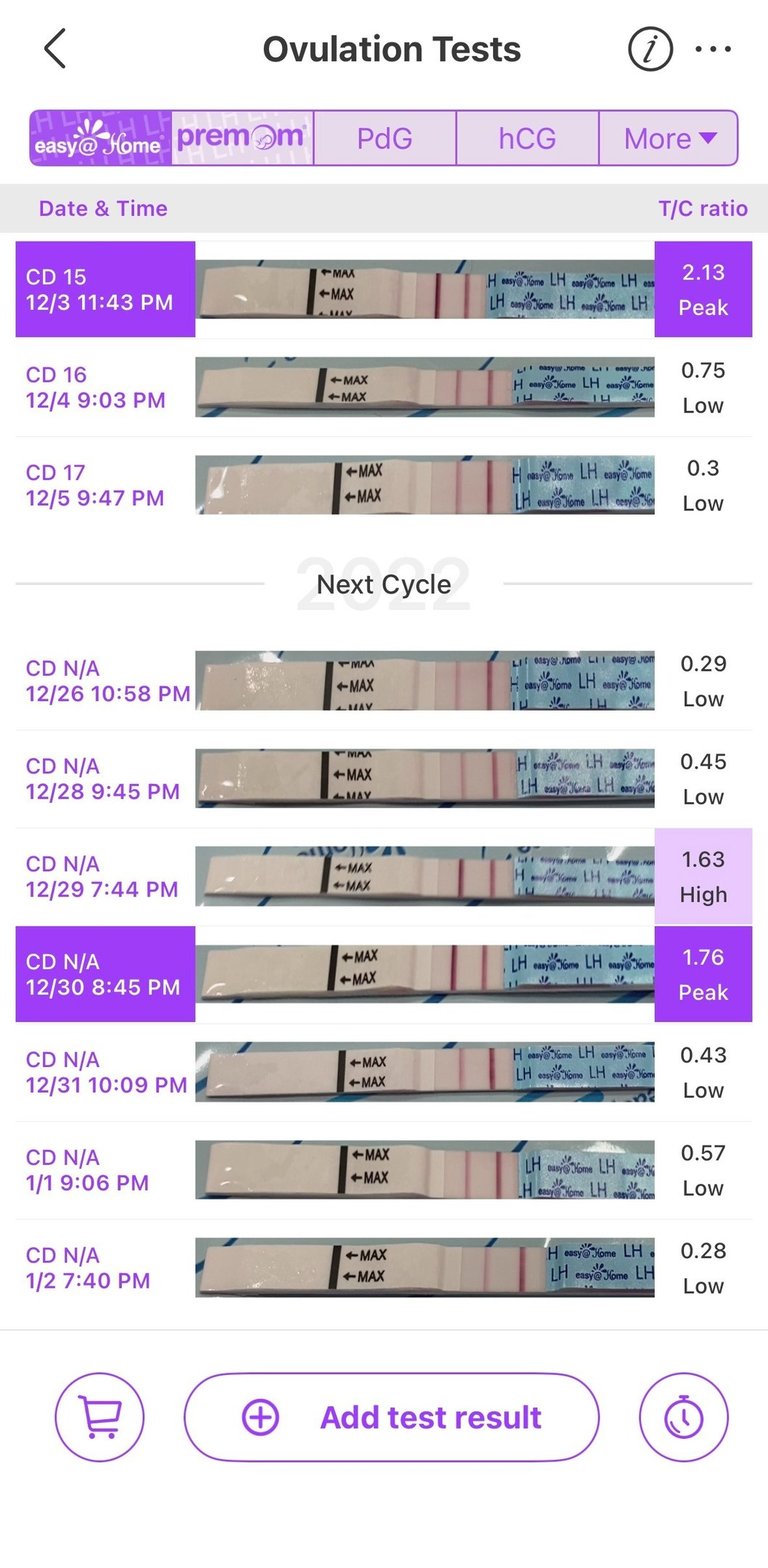
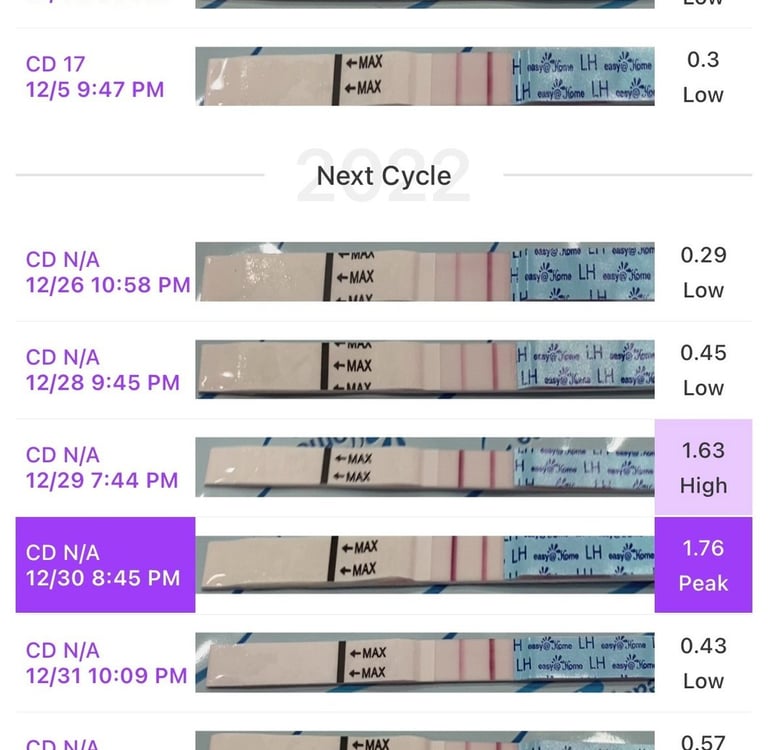
Tracking Ovulation After 35: The Tool That Actually Helped
Once I learned that ovulation predictor kits (OPKs) could detect an LH surge with a simple urine test, I knew that was where I needed to start — especially since I was still getting familiar with my cycle after stopping birth control, so I started using them from the very beginning.
I didn’t want to rely on an app guessing my fertile window. I wanted to know exactly when we needed to focus on trying.
OPKs showed me when my LH surge was happening, which allowed us to time intercourse intentionally rather than guessing.
A couple of months later, I added basal body temperature (BBT) tracking to confirm that ovulation had actually occurred. OPKs predicted it, and BBT confirmed it.
What I used
Fertility Friend app (for cycle and BBT tracking — preferred by my acupuncturist)
PreMom app (for LH strip photos, peak tracking, and BBT)
Tracking gave us direction. It told us when to focus.
And ultimately, it worked.
When we later tried for our second baby, OPKs were the only tool I used. No temperature tracking and no supplement experimenting. I simply used the test strips, identified my surge, and we conceived on the first and only try.
For me, that confirmed how powerful accurate timing can be — especially when trying to conceive after 35.
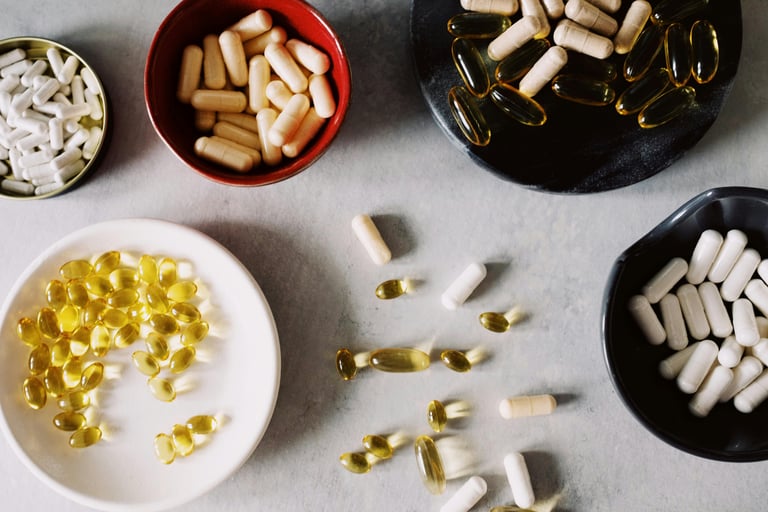
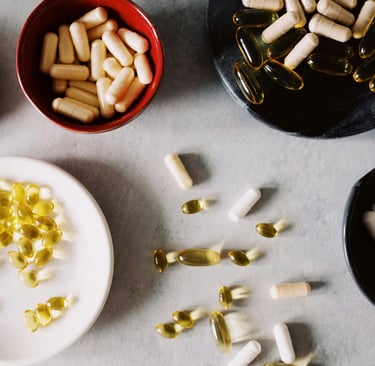
Supplements I Took While Trying to Conceive at 38
This part wasn’t very strategic.
At first, I didn’t know what the problem might be. As I tracked my cycle over about ten months, I noticed a pattern: one cycle would be about 28 days long, and the next would be closer to 40 days. They alternated almost every month.
Regardless of cycle length, I consistently started spotting around nine or ten days past ovulation (DPO), which I knew wasn’t ideal.
So I did what many people do — I started researching possible causes. I looked into progesterone issues, estrogen imbalance, egg quality concerns, and other potential explanations.
Most of the time I was simply guessing and trying different supplements to address whatever symptom I was focused on at the moment.
Prenatal Vitamins
I knew prenatal vitamins were important even before trying to conceive, so I started taking them early. I was always trying to find the “best” one and ended up switching brands several times.
Eventually I noticed a lot of baby hairs growing around my hairline and realized I must have been missing nutrients that the prenatals were replenishing. My sister, who is a hairdresser, had previously told me my hair was thinning, but I hadn’t believed her until I saw new growth myself.
I’m really glad I started taking prenatals early.
I tried:
I tried and still take:
DHA / Omega-3s
I also knew DHA and omega-3s were recommended during pregnancy, so I began taking them while trying to conceive.
I tried:
I tried and still take:
Other Supplements I Used at Various Points
Some supplements I took fairly consistently for general health:
Vitamin C
Zinc
Others I tried more sporadically while attempting to address specific symptoms:
It wasn’t a perfectly structured protocol — it was simply me trying to support my body while navigating uncertainty.
Beauty, Skincare, and Cleaning Products I Changed
While focusing on internal health, I also started paying attention to the products I used every day — things like shampoo, skincare, and laundry detergent.
I’m not someone who believes everything needs to be perfectly “clean” or toxin-free, but during this season I did want to reduce unnecessary exposure where I reasonably could.
Most of my changes focused on eliminating heavily fragranced products and switching to gentler alternatives.
Skincare
I switched to:
Whamisa Deep Rich Toner (was already using and still use)
Honest Beauty:
Althought I loved what I'd been using before, knowing that these products were being absorbed directly into my skin really motivated me to try to find EWG Verified skincare items, or at least items with fewer chemicals.
Haircare
I switched to:
These were simple swaps that removed a lot of artificial fragrance from my routine.
Makeup
I also transitioned most of my makeup to products from the Honest Company at the time. I don’t believe they make the exact products I used anymore, but I liked simplifying my routine and avoiding certain ingredients while trying to conceive.
I still use some of my old favorite makeup items, but I have switched to:
Laundry Detergent
One of the biggest household changes I made was switching laundry detergent.
I began using:
This removed the strong synthetic fragrance from our clothes, bedding, and towels.
Reducing Fragrance at Home
Beyond specific products, I also tried to reduce fragrance exposure around the house by avoiding things like:
Scented candles
Strong air fresheners
Heavily fragranced cleaning products
Did this guarantee anything? Of course not.
But during a season where so much felt out of my control, making a few thoughtful changes gave me peace of mind.
Fertility Hormone Testing After 35
In September 2022, I followed my acupuncturist’s recommendation and tested my hormone levels so we would have real information to work with.
I used an at-home test through Ro + Modern Fertility that I mailed in for results.
The panel included:
TSH
AMH
FSH
Estradiol
LH
Prolactin
The results didn’t magically make everything feel calm, but they gave us real data instead of speculation. My acupuncturist used that information to adjust the herbs she recommended for balancing my hormones.


Walking with my dog, Sakura
Lifestyle Changes We Focused On
Alongside everything else, both my husband and I were intentional about our overall health.
We didn’t drink alcohol or use drugs, but during this time we were especially mindful to avoid anything unnecessary that could affect fertility.
We focused on:
Morning and evening walks with my dog
Prioritizing sleep
Eating whole foods
Reducing processed carbs and sugar
Maintaining a healthy weight
Sometimes supporting fertility isn’t about adding more — it’s about removing stressors.
The Shift: Letting Go of Pressure
When I left my job, something unexpected happened.
I stopped obsessing about trying to conceive.
I didn’t stop tracking — I still used OPKs — but mentally I stepped back. I told myself I would spend the next few months focusing on getting healthy, eating better, and letting my body settle before worrying about anything else.
For the first time in months, I wasn’t researching constantly. I wasn’t analyzing every symptom. I wasn’t trying to fix something.
I was just focusing on health — and enjoying my first real break from work in nearly 20 years.
During that time I was also very close to my ideal weight of 115 pounds, something I had intentionally worked toward because I knew overall health can influence fertility.
I spent hours walking on weekends, getting sunlight and gentle movement without overstressing my body.
For several years before conceiving, I had also been indoor rock climbing. I used to climb more frequently but slowed down after moving in with my husband. Climbing made me stronger and challenged me physically, but it always felt energizing rather than draining.
Between the walking, climbing, better sleep, reduced stress, and mental shift, my body may have finally felt supported instead of pressured.
And that was the cycle we conceived.
What Helped Me Get Pregnant at 38?
I don’t know exactly.
Was it:
Leaving my stressful job?
Letting go of pressure?
Being at my ideal weight?
Consistent walking?
Indoor rock climbing?
Months of supplements?
Hormonal adjustments?
Reduced toxins?
Accurate ovulation timing?
Maybe it was the combination.
But if I had to name one practical, repeatable tool that clearly helped, it would be tracking ovulation with OPKs.
Trying to conceive at 38 taught me this:
Your body may not be broken.
It may need support.
It may need less stress.
It may need accurate timing.
And sometimes the shift isn’t adding more.
Sometimes it’s letting go of pressure.
Important Disclaimer
This post reflects my personal experience trying to conceive at 38 and is not medical advice. Always consult your healthcare provider before starting supplements, changing medications, or making significant health decisions.
Some links on this site may be affiliate links, which means I may earn a small commission at no additional cost to you. I only share products I personally used or researched and genuinely believe are helpful.
FAQs
Can you get pregnant naturally at 38?
Yes. While fertility declines with age, many women conceive naturally in their late 30s. Tracking ovulation accurately can improve your chances.
How long does it take to get pregnant after birth control?
Some people conceive quickly, while others need several months for their cycles to regulate.
Do ovulation predictor kits work after 35?
Yes. OPKs detect the LH surge that occurs before ovulation, helping identify the most fertile days of your cycle.
© 2026 MeganLovesSakura. All rights reserved.